A–01 Migration inspection tool
Know what survived the import.
Compare a Postman collection with its Bruno or Hoppscotch export. Get a field-level loss report before your team changes clients.
cargo install --path .
B–02 Inspection sequence
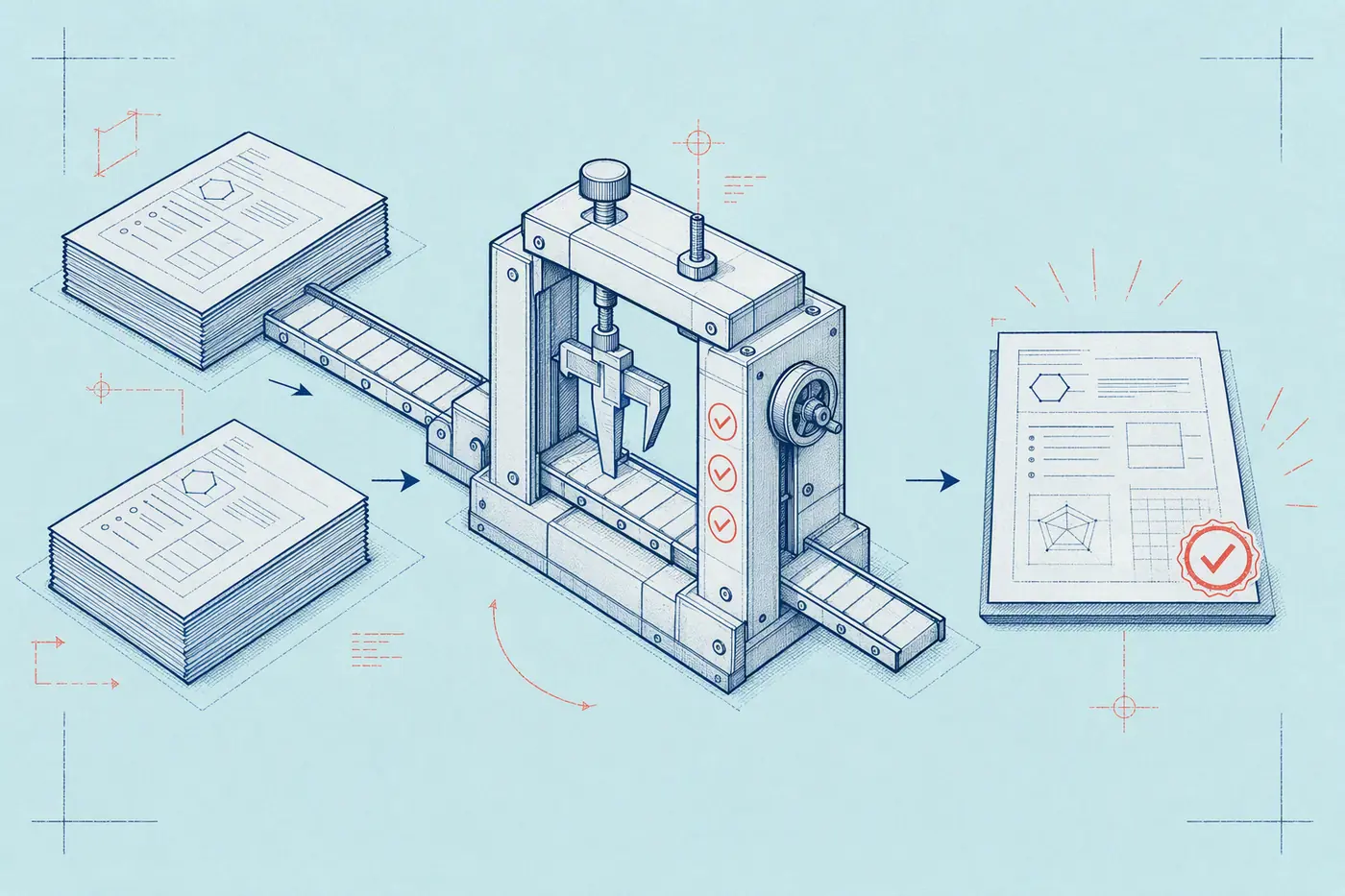
A migration check you can repeat.
One read-only pass turns “the import looked okay” into a reviewable artifact.
-
01
Point at both sides
Use your original Postman v2.1 export and the Bruno directory or Hoppscotch JSON produced by the import.
-
02
Measure the structure
Requests are matched by folder path and name. Critical fields, scripts, examples, variables, and body bytes are compared.
-
03
Keep the evidence
Commit the Markdown report for review or gate a migration fixture in CI with stable JSON and explicit exit codes.
C–03 Field schedule
Checks what teams actually lose.
Every finding carries a stable code, severity, artifact path, and redacted evidence.
D–04 Local inspection bench
See a lossy import get caught.
This browser preview reads files in memory and makes no network calls. The CLI performs the full comparison.
Files never leave this tab. Values are not rendered or stored.
Inspection report
No measurement yet.
Load the sample or choose two exports to begin.
What a CI run looks like
$ escape-hatch verify --source team.json --target imported.json --json
✓ inventoried 24 requests · 6 folders · 18 variables
! AUTH_CHANGED · Billing/Create invoice
× 3 errors · 2 warnings · exit 1
E–05 Put it in the checklist
One binary. No account.
Build locally today; release archives can carry the same binary later.
$ cargo install --path .

$ escape-hatch verify \
  --source team.postman_collection.json \
  --target bruno/ \
  --format markdown \
  --output migration-report.md

✓ values: [redacted]
! wrote migration-report.mdF–06 Before the team switches
Make the silent loss visible.
Export both sides, run one local command, and review the evidence with the people who own the workflows.
Get the verifier